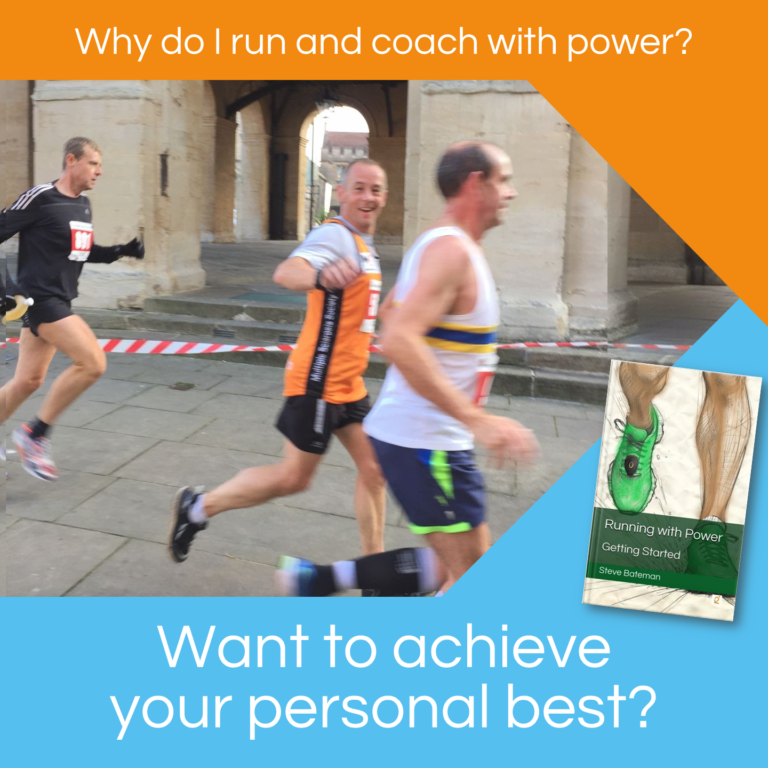
Why Steve runs and coaches with power

Why Steve runs and coaches using power

𝐖𝐡𝐲 𝐝𝐨𝐞𝐬 𝐒𝐭𝐞𝐯𝐞, 𝐚 𝐔𝐊-𝐛𝐚𝐬𝐞𝐝 𝐫𝐮𝐧𝐧𝐞𝐫 𝐚𝐧𝐝 𝐜𝐨𝐚𝐜𝐡, 𝐮𝐬𝐞 𝐩𝐨𝐰𝐞𝐫?

There are two reasons:
⚡ The numbers match how hard you’re working … they just ‘feel right’
🎯 Targets (for training and racing) are based on you … power is personal

Let me unpack those.

𝐓𝐡𝐞 𝐧𝐮𝐦𝐛𝐞𝐫𝐬 𝐦𝐚𝐭𝐜𝐡 𝐡𝐨𝐰 𝐡𝐚𝐫𝐝 𝐲𝐨𝐮’𝐫𝐞 𝐰𝐨𝐫𝐤𝐢𝐧𝐠

Power provides numbers representing how hard you’re working while running – your effort.

Running by effort isn’t new – runners have used ‘Perceived Exertion’ for many years. What is new is being able to put numbers to your effort.

Are the numbers actionable?

YES, based on using power since 2018 … and on multiple independent studies.

𝐓𝐚𝐫𝐠𝐞𝐭𝐬 𝐚𝐫𝐞 𝐛𝐚𝐬𝐞𝐝 𝐨𝐧 𝐲𝐨𝐮

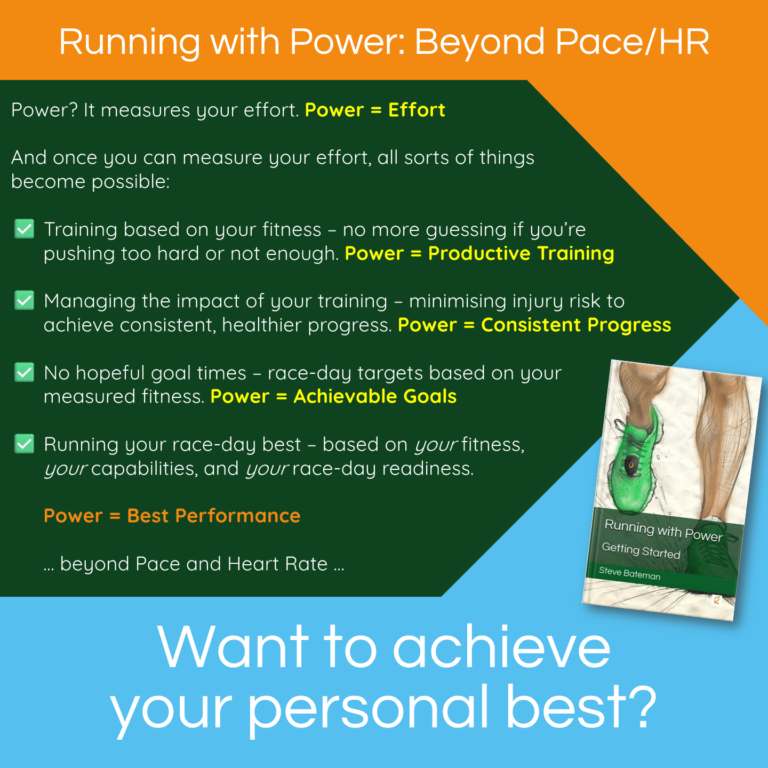
Once you can measure your effort, all sorts of things become possible – you can:
✅ assess your running fitness at any point in your training
✅ ensure your training stays productive by setting workout targets based on your current fitness, rather than on a hopeful goal time
✅ reduce your risk of injury using completed workouts to track your training load
✅ personalise your race-day targets to achieve the best result you’re capable of on the day

All of these are calculated using your completed workouts. Power really is Personal.

𝐖𝐡𝐚𝐭 𝐝𝐨𝐞𝐬 𝐭𝐡𝐢𝐬 𝐦𝐞𝐚𝐧 𝐟𝐨𝐫 𝐜𝐨𝐚𝐜𝐡𝐢𝐧𝐠?

Using my runners’ completed workouts, I can build a detailed profile of each runner based on what they can achieve (right now). And I can use that profile to set targets that are individual to each runner’s capability (right now), to get the most from their training while minimising injury risk.

I can do all of this virtually, to coach runners in the UK, the US, or any other place worldwide.

Power (and the system behind it) provides a science-backed, metrics-based, individualised approach to training and racing – for runners and for coaches.

𝑺𝒉𝒐𝒖𝒍𝒅𝒏’𝒕 𝒚𝒐𝒖 𝒃𝒆 𝑹𝒖𝒏𝒏𝒊𝒏𝒈 𝒘𝒊𝒕𝒉 𝑷𝒐𝒘𝒆𝒓?

Questions?
📖 Getting Started

Why Steve runs and coaches with power

Why Asya runs with power

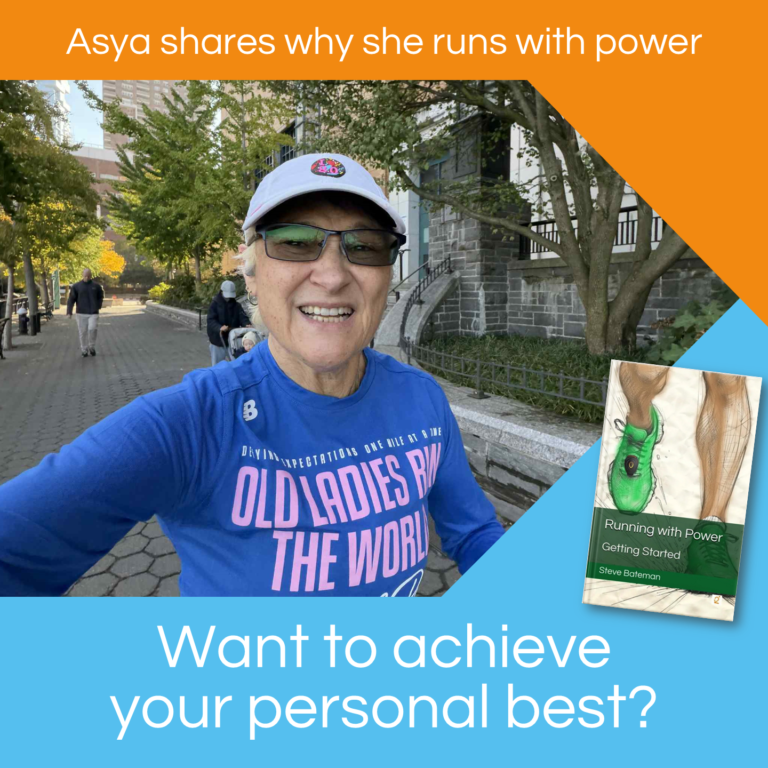
Asya, running with power in the US

𝐖𝐡𝐲 𝐝𝐨𝐞𝐬 𝐀𝐬𝐲𝐚 𝐫𝐮𝐧 𝐰𝐢𝐭𝐡 𝐩𝐨𝐰𝐞𝐫?

✅ Initially, I wanted accurate pace and distance

I did not get a power meter to run with power (initially). Mainly, I was frustrated by terrible GPS distance and pace tracking in NYC where I live and run. I knew from past experiences that a foot pod with an accelerometer would be able to get far more precise data about my pace and distance and in my world data is good – hey, I’m an engineer, more data is always better! 🙂

✅ Then I discovered Power=Effort!

It wasn’t till I started reading about training with power on Stryd website that I realized that in addition to pace and distance the pod can measure actual effort which seemed amazing to me and once I realized I could run with steady effort just by sticking to a number, there was no going back. Before long, I signed up for a power-based training program and finished a half-marathon worrying only about power and had the same amazing experience with both training, and racing. 

✅ I know exactly how hard I’m working when running

I’ve been using different power-based programs since and I can’t imagine doing it any other way – I know exactly how hard I’ve been working, and when I can push harder, no matter where I’m running, and as a bonus, the pace and distance measurements are always spot-on.

✅ Every runner should have a ‘coach in a pod’!

Power makes it so much easier to know you’re expending appropriate effort. And don’t be misled by the name – power isn’t just for younger or faster runners, in fact it helps weaker/slower/newer runners even more than experienced fast runners. It’s like having a coach in a pod!

𝑺𝒉𝒐𝒖𝒍𝒅𝒏’𝒕 𝒚𝒐𝒖 𝒃𝒆 𝑹𝒖𝒏𝒏𝒊𝒏𝒈 𝒘𝒊𝒕𝒉 𝑷𝒐𝒘𝒆𝒓?

Questions?
📖 Getting Started

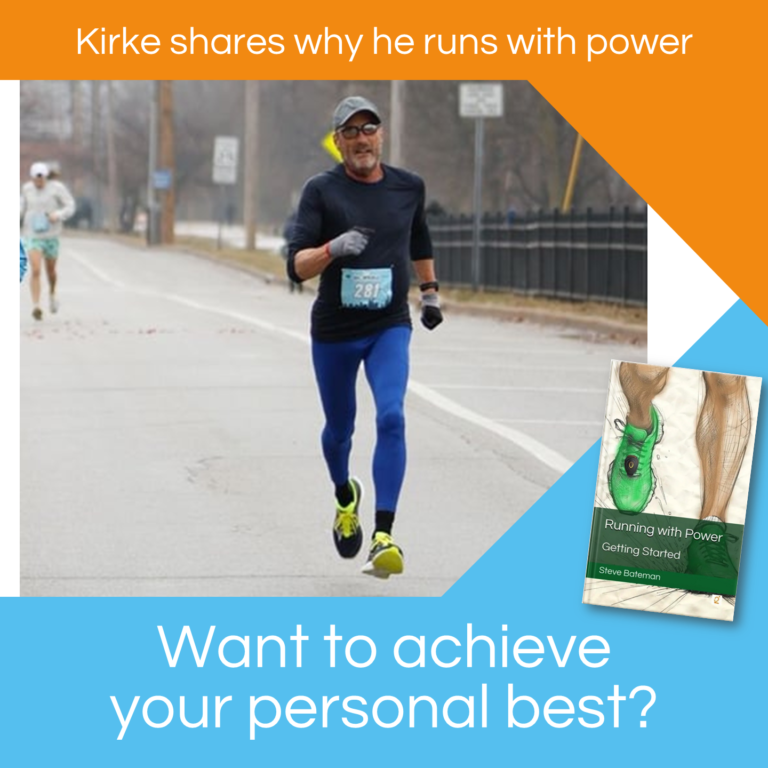
Why Kirke runs with power

Kirke running with power

𝐖𝐡𝐲 𝐝𝐨𝐞𝐬 𝐊𝐢𝐫𝐤𝐞 𝐫𝐮𝐧 𝐰𝐢𝐭𝐡 𝐩𝐨𝐰𝐞𝐫?

✅ Power is an objective and consistent measure of effort.

Power is an estimate of your overall metabolic energy expenditure rate. It doesn’t care about your motivation (or lack of motivation) for a given effort. It isn’t fooled by the surge of adrenaline at the start of a race. And it’s not affected by ego or your competitive instincts.

✅ Power is “portable” across different running conditions.

If you’re running Uphill or downhill, changes in effort due to slope are accounted for. If you’re running into a headwind or with a tailwind, changes in effort due to variations in wind speed and direction are accounted for. If you’re on track, road or trail, power works well across varying running surfaces.

Pace is not very portable, Grade Adjusted Pace (GAP) is more portable but still does not account for varying wind conditions.

Heart Rate is more portable than pace, but subject to environmental conditions, drift, and lag.

✅ Power is responsive.

Changes in intensity are reflected quickly, allowing real-time feedback. And power is much more responsive than heart rate.

✅ Power provides a good structure for training zones, workout targets, and race planning.

Critical Power (CP), Reserve Work Capacity (RWC), and fatigue characteristics derived from maximal efforts can provide an accurate snapshot of a runner’s capabilities. And power history provides an excellent basis for race planning.

✅ Power provides a good basis for tracking running stress and training loads.

Power can find the “sweet spot” between overtraining and injury (by increasing load too fast) and stimulating performance improvements (by increasing load fast enough).

𝑺𝒉𝒐𝒖𝒍𝒅𝒏’𝒕 𝒚𝒐𝒖 𝒃𝒆 𝑹𝒖𝒏𝒏𝒊𝒏𝒈 𝒘𝒊𝒕𝒉 𝑷𝒐𝒘𝒆𝒓?

Questions?
📖 Getting Started

Why Kirke runs with power

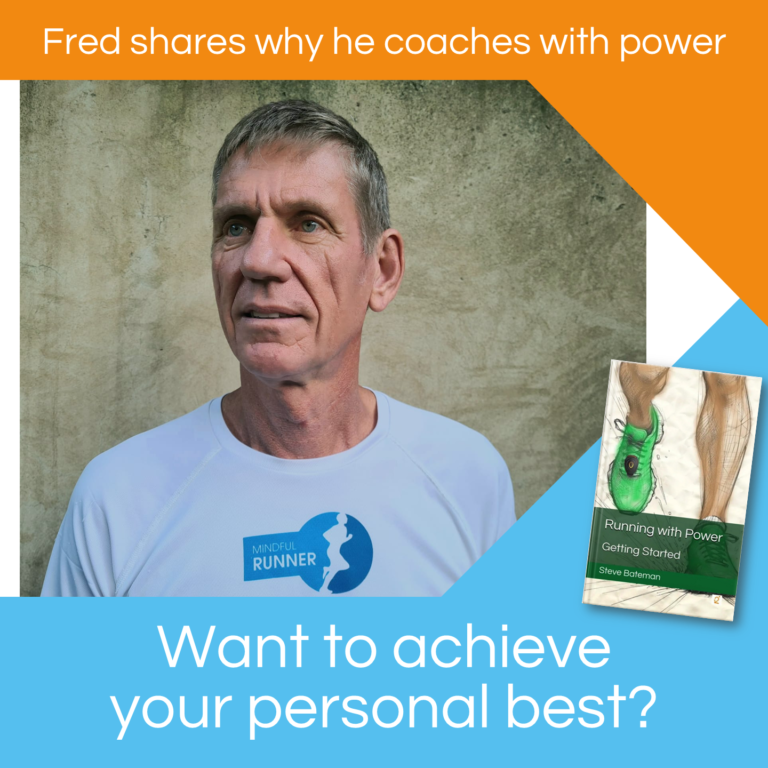
Why Fred coaches with power

Fred, a trail running coach in South Africa

𝐖𝐡𝐲 𝐝𝐨𝐞𝐬 𝐅𝐫𝐞𝐝, 𝐚 𝐭𝐫𝐚𝐢𝐥 𝐫𝐮𝐧𝐧𝐢𝐧𝐠 𝐜𝐨𝐚𝐜𝐡 𝐢𝐧 𝐒𝐨𝐮𝐭𝐡 𝐀𝐟𝐫𝐢𝐜𝐚, 𝐮𝐬𝐞 𝐩𝐨𝐰𝐞𝐫?

✅ It’s an objective, instant measure of effort

Power gives my athletes objective data that pace and heart rate can’t. It reacts instantly and uniformly, no matter the terrain, temperature, or excitement of the moment. On technical trails and hills where pace is meaningless and heart rate lags, power shows the real effort being produced.

✅ It works for intervals, for climbs, for descents…

Short intervals under 20 seconds, long intervals up to 10 minutes, climbs and even descents all benefit from training with power. More often than not, athletes learn to slow down a little on the climbs and to push more on the downhills. One warning – avoid power targets on steep technical downhills where skill is the primary factor for how fast one can descend.

✅ It allows runners to experiment

I also use power to teach awareness. I’ll have my runners experiment with their form, shift hips, focus on reducing ground contact, drive the knees, etc. and notice the impact of that on power. It becomes a feedback loop for improving form and economy.

✅ It keeps runners on target on race-day

On race day, power keeps trail runners in control. Heart rate spikes with adrenaline, and pace is useless on technical ground. Power keeps athletes from going out too hard at the start of a race, and it’s a reality check deep into the event to keep them moving when attention flags.

✅ The longer you use it, the better you get

I noticed that training with power smooths out inefficiencies with prolonged use. As a coach, it’s proven to be extremely useful in improving running economy on all terrains.

𝑺𝒉𝒐𝒖𝒍𝒅𝒏’𝒕 𝒚𝒐𝒖 𝒃𝒆 𝑹𝒖𝒏𝒏𝒊𝒏𝒈 𝒘𝒊𝒕𝒉 𝑷𝒐𝒘𝒆𝒓?

Questions?
📖 Getting Started

Why Fred coaches with power

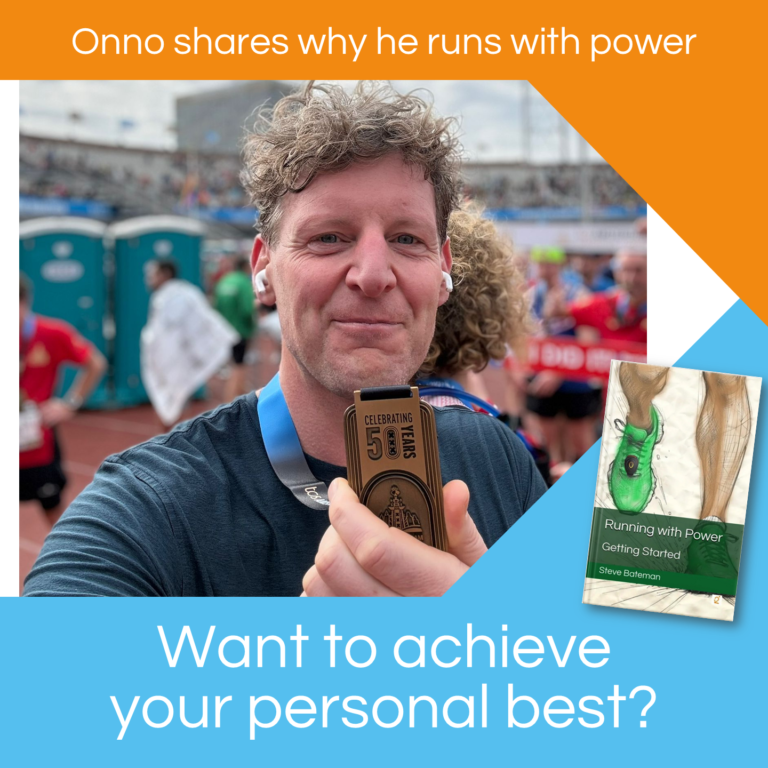
Why Onno runs with power

Onno with a medal and a new PB

𝐖𝐡𝐲 𝐝𝐨𝐞𝐬 𝐎𝐧𝐧𝐨 𝐫𝐮𝐧 𝐰𝐢𝐭𝐡 𝐩𝐨𝐰𝐞𝐫?

✅ Stop chasing faster paces or comparing to others

When I started running a couple of years ago, I found myself chasing faster paces during training and comparing myself to others. Which felt good for a single session or two, but inevitably led to issues down the road: fatigue, lack of adaptation and injury.

✅ Manage your effort

Especially for those new to running there is a power-full tool, that allows you to manage your effort. By running at the right intensity in all circumstances, not too hard and not too slow, you challenge your body just the right amount, and with good rest and nutrition you can achieve optimal adaptation.

✅ Relax into your running

Running with Stryd, running based on my effort (in Watts) instead of pace, took ego out of the equation. I wasn’t trying to run too hard going up hill or facing headwinds. It made running more relaxed, as I learned how to run by feel/effort.

✅ An unforgettable marathon, and a new PB

I just ran my second marathon using Stryd and I ran the whole thing at the correct effort. My Stryd power meter allowed me to run consistently at the right intensity. This allowed me to relax into the speed I could maintain and make this marathon unforgettable.

And I ran a new PB to boot!

𝑺𝒉𝒐𝒖𝒍𝒅𝒏’𝒕 𝒚𝒐𝒖 𝒃𝒆 𝑹𝒖𝒏𝒏𝒊𝒏𝒈 𝒘𝒊𝒕𝒉 𝑷𝒐𝒘𝒆𝒓?

Questions?
📖 Getting Started

Why Onno runs with power

What advice would you give to someone not yet Running with Power?

Runner feedback (depicted as a green thumbs up and a red thumbs down)

𝐖𝐡𝐚𝐭 𝐚𝐝𝐯𝐢𝐜𝐞 𝐰𝐨𝐮𝐥𝐝 𝐲𝐨𝐮 𝐠𝐢𝐯𝐞 𝐭𝐨 𝐬𝐨𝐦𝐞𝐨𝐧𝐞 𝐧𝐨𝐭 𝐲𝐞𝐭 𝐑𝐮𝐧𝐧𝐢𝐧𝐠 𝐰𝐢𝐭𝐡 𝐏𝐨𝐰𝐞𝐫?

This is part of a series of posts on runners’ feedback about Running with Power.

Based on survey responses and book research, here’re the top three pieces of advice that runners using power would give to those not yet using it.

𝐋𝐞𝐚𝐫𝐧 𝐭𝐡𝐞 𝐟𝐮𝐧𝐝𝐚𝐦𝐞𝐧𝐭𝐚𝐥 𝐜𝐨𝐧𝐜𝐞𝐩𝐭𝐬

There are a few fundamental concepts that form the foundation for understanding power. They’re not difficult to learn and learning them really helps understand how to make the most of running with power.

𝐔𝐬𝐞 𝐚 𝐭𝐫𝐚𝐢𝐧𝐢𝐧𝐠 𝐩𝐥𝐚𝐧 𝐝𝐞𝐬𝐢𝐠𝐧𝐞𝐝 𝐟𝐨𝐫 𝐩𝐨𝐰𝐞𝐫

The Palladino plans were frequently mentioned, with targets matched to how the body works, incremental progression and built-in power tests. They improve your fitness without you noticing, while reducing the risk of injury or overtraining.

On a related point, power works best when training for an event. If all you ever do is run easy, or run with friends, then Running with Power isn’t for you.

𝐓𝐫𝐮𝐬𝐭 𝐢𝐧 𝐭𝐡𝐞 𝐩𝐫𝐨𝐜𝐞𝐬𝐬

Just start by wearing the footpod (or turning on wrist-based power). Later, start looking at the metrics and, combined with learning the concepts, begin to understand what your data is showing you about your training.

𝐎𝐭𝐡𝐞𝐫 𝐚𝐝𝐯𝐢𝐜𝐞

There was other advice offered by runners using power, including: it helps you learn about your body and your capabilities; keep your Threshold Power updated (it’s a basic for accurate targets & planning); it helps if you like working with data and numbers; power helps maintain training consistency; use power to calibrate your perceived effort

𝑺𝒉𝒐𝒖𝒍𝒅𝒏’𝒕 𝒚𝒐𝒖 𝒃𝒆 𝑹𝒖𝒏𝒏𝒊𝒏𝒈 𝒘𝒊𝒕𝒉 𝑷𝒐𝒘𝒆𝒓?

Questions?
📖 Getting Started

What advice would you give to someone not yet Running with Power?

What difficulties have you experienced using power?

Runner feedback (depicted as a green thumbs up and a red thumbs down)

𝐖𝐡𝐚𝐭 𝐝𝐢𝐟𝐟𝐢𝐜𝐮𝐥𝐭𝐢𝐞𝐬 𝐡𝐚𝐯𝐞 𝐲𝐨𝐮 𝐞𝐱𝐩𝐞𝐫𝐢𝐞𝐧𝐜𝐞𝐝?

This is part of a series of posts on runners’ feedback about Running with Power.

Based on survey responses and book research, here are the top three difficulties runners experienced using power.

𝐆𝐞𝐭𝐭𝐢𝐧𝐠 𝐒𝐭𝐚𝐫𝐭𝐞𝐝

There is a learning curve associated with using power – some fundamental concepts that power is based on, and some things you should and shouldn’t do. However, these are well-known, documented and often discussed in the power-focused Facebook groups – it just takes time.

The setup can also be quite complicated – whether you’re using Stryd or using wrist-based power. With a little patience, it’s possible to end up with a watch setup and supporting application setup that work well. It’s just harder than the setup needed to run using pace or heart rate.

𝐌𝐚𝐢𝐧𝐭𝐚𝐢𝐧𝐢𝐧𝐠 𝐚 𝐯𝐚𝐥𝐢𝐝 𝐓𝐡𝐫𝐞𝐬𝐡𝐨𝐥𝐝 𝐏𝐨𝐰𝐞𝐫

There are three commonly-used test protocols, all of which produce a usable Threshold Power number. But they all rely on maximum effort runs – and it’s this aspect that runners found difficult. Fortunately for most runners, max-effort runs, while always difficult, got easier to execute with practice.

𝐋𝐞𝐚𝐫𝐧𝐢𝐧𝐠 𝐭𝐨 𝐫𝐮𝐧 𝐮𝐬𝐢𝐧𝐠 𝐩𝐨𝐰𝐞𝐫

Many runners were already be used to running using pace, HR or perceived effort. They reported that it took time to fully trust power, and to stop relying on the other metrics.

𝐎𝐭𝐡𝐞𝐫 𝐝𝐢𝐟𝐟𝐢𝐜𝐮𝐥𝐭𝐢𝐞𝐬

There were other difficulties runners experienced using power, including: using power in mountainous, windy or other ‘unusual’ environments; that power represents your effort (rather than actually being your effort, like cycling); that it was easy to forget (or forget to charge) the pod; that it was difficult to explain to others.

That said, power is still relatively new – we can expect further changes and improvements moving forward!

𝑺𝒉𝒐𝒖𝒍𝒅𝒏’𝒕 𝒚𝒐𝒖 𝒃𝒆 𝑹𝒖𝒏𝒏𝒊𝒏𝒈 𝒘𝒊𝒕𝒉 𝑷𝒐𝒘𝒆𝒓?

Questions?
📖 Getting Started

What benefits have you experienced using power?

Runner feedback (depicted as a green thumbs up and a red thumbs down)

𝐖𝐡𝐚𝐭 𝐛𝐞𝐧𝐞𝐟𝐢𝐭𝐬 𝐡𝐚𝐯𝐞 𝐲𝐨𝐮 𝐞𝐱𝐩𝐞𝐫𝐢𝐞𝐧𝐜𝐞𝐝?

This is part of a series of posts on runners’ feedback about Running with Power.

Based on survey responses and book research, here are the top three benefits runners experienced using power.

𝐀𝐛𝐥𝐞 𝐭𝐨 𝐭𝐫𝐚𝐢𝐧 𝐭𝐨 𝐭𝐚𝐫𝐠𝐞𝐭𝐬

Sounds simple? Yet with power, according to the feedback, it’s much easier to do. First, the targets are numbers or number ranges, rather than ‘10k pace’ or ‘zone 2’ (when your heart rate seems determined to stay in zone 3). Second, they’re based on your current fitness, adjusting as you get fitter. Finally, you just have to run to effort, which changes to match your route, however hilly it might be.

𝐂𝐨𝐧𝐬𝐢𝐬𝐭𝐞𝐧𝐜𝐲

The #1 goal of training – being able to follow the plan without getting injured. Training to targets matched to individual fitness gave runners confidence in the plan, allowing them to ‘relax’ and enjoy the experience. And with plans written to add training load slowly and carefully, runners experienced a powerful feedback loop – clear targets => able to run to target => confidence in the plan => increasing fitness without injury => targets adjust to match fitness => able to run to target…

𝐈𝐦𝐩𝐫𝐨𝐯𝐞𝐝 𝐫𝐚𝐜𝐞-𝐝𝐚𝐲 𝐩𝐞𝐫𝐟𝐨𝐫𝐦𝐚𝐧𝐜𝐞

Power offers a couple of race planners, both of which produced power-based targets for races and events that were not only achievable, but for many runners, accurate to within a few watts, and to within a minute or two (over a marathon).

But it was at the start that power was most beneficial, providing a target that prevented runners from starting too fast (given the excitement and the ‘freshness’ that’s usually present at the start of many events).

𝐎𝐭𝐡𝐞𝐫 𝐫𝐞𝐚𝐬𝐨𝐧𝐬

There were many other benefits runners experienced using power, including: being able to measure fitness improvements; power is responsive, matched to effort; gaining a better understanding of their physiology and capabilities; finding a great community of runners all learning how best to use power.

𝑺𝒉𝒐𝒖𝒍𝒅𝒏’𝒕 𝒚𝒐𝒖 𝒃𝒆 𝑹𝒖𝒏𝒏𝒊𝒏𝒈 𝒘𝒊𝒕𝒉 𝑷𝒐𝒘𝒆𝒓?

Questions?
📖 Getting Started

What benefits have you experienced using power?

Why did you start running with power?

Runner feedback (depicted as a green thumbs up and a red thumbs down)

𝐖𝐡𝐲 𝐝𝐢𝐝 𝐲𝐨𝐮 𝐬𝐭𝐚𝐫𝐭 𝐫𝐮𝐧𝐧𝐢𝐧𝐠 𝐰𝐢𝐭𝐡 𝐩𝐨𝐰𝐞𝐫?

This is part of a series of posts on runners’ feedback about Running with Power.

Based on survey responses and book research, here are the top four reasons why runners started using power.

𝐈𝐭’𝐬 𝐣𝐮𝐬𝐭 𝐨𝐧𝐞 𝐧𝐮𝐦𝐛𝐞𝐫

The most popular reason – power gives you one number that changes as your effort changes. And it represents your effort when on the flat, up and down hills, or running in wind. You can even adjust for running in heat, high humidity or at altitude. You just need to ‘run to the number’.

𝐏𝐚𝐜𝐞 𝐚𝐧𝐝 𝐡𝐞𝐚𝐫𝐭 𝐫𝐚𝐭𝐞 𝐰𝐞𝐫𝐞𝐧’𝐭 𝐰𝐨𝐫𝐤𝐢𝐧𝐠

Whether it was because of pace issues on hilly routes, heart rate lags when starting or stopping intervals, or not being able to accurately judge effort, runners were having difficulties using other methods of measuring how hard they were running.

𝐓𝐫𝐚𝐢𝐧𝐢𝐧𝐠 𝐭𝐡𝐚𝐭 𝐰𝐨𝐫𝐤𝐬

Many non-power plans come with a risk of overtraining or leaving potential training gains unrealised. Power uses narrower target ranges within zones, and the power-based plans from Steve Palladino have worked for hundreds of injury-free runners.

𝐁𝐞𝐭𝐭𝐞𝐫 𝐫𝐚𝐜𝐞 𝐫𝐞𝐬𝐮𝐥𝐭𝐬

Runners were looking for a way to improve their race results, qualify for Boston (or similar), or to find a way to improve their race pacing. While power can’t guarantee better results or a qualifying time, race planning with power uses current fitness, stamina and running effectiveness to determine personalised race targets.

𝐎𝐭𝐡𝐞𝐫 𝐫𝐞𝐚𝐬𝐨𝐧𝐬

There were many other reasons why runners started using power, including: power is based on physiology; it’s backed by years of research (from cycling and running); it uses data-driven insights; it can be used on a treadmill or in bad GPS locations.

𝑺𝒉𝒐𝒖𝒍𝒅𝒏’𝒕 𝒚𝒐𝒖 𝒃𝒆 𝑹𝒖𝒏𝒏𝒊𝒏𝒈 𝒘𝒊𝒕𝒉 𝑷𝒐𝒘𝒆𝒓?

Questions?
📖 Getting Started

Why did you start running with power?

Feedback from runners using power

Runner feedback (depicted as a green thumbs up and a red thumbs down)

𝐅𝐞𝐞𝐝𝐛𝐚𝐜𝐤 𝐟𝐫𝐨𝐦 𝐫𝐮𝐧𝐧𝐞𝐫𝐬 𝐮𝐬𝐢𝐧𝐠 𝐩𝐨𝐰𝐞𝐫

A few weeks ago, posts outlined reasons you might choose to use power to measure how hard you’re running.

This week, posts will cover this in a little more depth, exploring the following questions:
❓ Why did you start running with power?
❓ What benefits have you experienced?
❓ What difficulties have you experienced?
❓ What advice would you give to someone not yet Running with Power?

The posts will summarise the top themes from feedback received when asking runners these questions – feedback from two annual surveys, and feedback gathered while researching two of my books (‘Why’ and ‘Getting Started’).

Here are my answers to those questions.

𝐖𝐡𝐲?

I wanted to break sub-4 for the marathon and found training using pace or heart rate difficult in several ways. Power (training using effort) just made sense to me … plus, I like working with data and metrics.

𝐁𝐞𝐧𝐞𝐟𝐢𝐭𝐬?

There’s magic in the numbers – as a runner using power, I can: measure (and track) my fitness; set precise workout targets; monitor my training load; set achievable race-day targets.

As a coach, power makes it possible to set workout goals that I know will be usable whatever route my runners choose to take (hilly or not). And the insights that are possible using power data make fine-tuning (or course-correcting) so much easier.

𝐃𝐢𝐟𝐟𝐢𝐜𝐮𝐥𝐭𝐢𝐞𝐬?

It was expensive – I bought a running watch and a Stryd footpod. And it was difficult to use, although the Stryd PowerCenter these days is light years ahead of where it was when I first started.

While it is now possible to buy a running watch with a power meter inside, it’s complex to calculate power metrics – hopefully that’ll change in the next few years.

𝐀𝐝𝐯𝐢𝐜𝐞?

Go for it. Based on using power since 2018, I firmly believe Running with Power is the most effective way to train.

𝑺𝒉𝒐𝒖𝒍𝒅𝒏’𝒕 𝒚𝒐𝒖 𝒃𝒆 𝑹𝒖𝒏𝒏𝒊𝒏𝒈 𝒘𝒊𝒕𝒉 𝑷𝒐𝒘𝒆𝒓?

Questions?
📖 Getting Started

Feedback from runners using power